Requirements for ventilation in businesses
At Technor, we work daily with solutions that meet both regulatory requirements and industry-specific standards.
What do requirements for ventilation in businesses cover?
Ventilation in commercial buildings is a legal requirement. Regardless of whether it is industry, workshops, laboratories, production or other commercial environments, there are clear requirements for ventilation in commercial buildings to ensure a healthy working environment, correct process execution and compliance with applicable legislation. The requirements for ventilation in commercial buildings depend on the use of the building, the processes taking place and which substances are handled. Overall, ventilation is about:
- Remove polluted air, dust, smoke and fumes
- Ensure sufficient air exchange
- Preventing harmful health effects
- Reduce the risk of fire and explosion
Therefore, both process ventilation requirements and general comfort ventilation play a crucial role.
Contact us
Would you like to hear more about the solutions we offer within process ventilation and process extraction, or would you like a quote for a specific task? Then contact us via the contact form below and we will get back to you as soon as possible.
Ventilation industry form
Process ventilation requirements
In many industries, ordinary room ventilation is not sufficient. Here, stricter requirements are placed on process ventilation, which aims to remove pollution directly at the source before it spreads throughout the room.
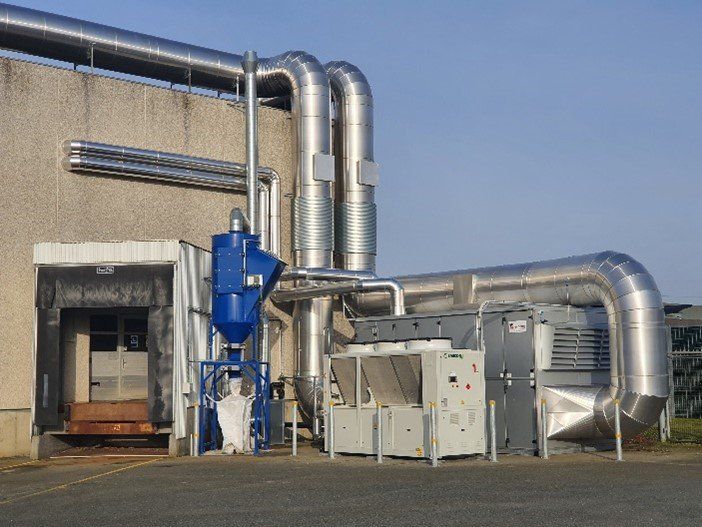
Process ventilation is typically used in work situations where harmful or irritating substances such as dust, smoke, fumes or aerosols are generated. It can take the form of point extraction, encapsulated processes or specially designed extraction solutions.
Process ventilation is often required for:
- Welding and soldering
- Handling and mixing of chemicals
- Dust and chip-removing processes
- Heat, smoke and steam generating production
The specific requirements for process ventilation include, among other things:
- Correct air volumes adapted to the process
- High capture efficiency at the source
- Effective filtration of harmful particles
- Correct placement of exhaust so that contaminated air is not recirculated
- Adequate filtration of recirculated air if recirculation is possible.
The system must always be dimensioned based on the specific process and documented in accordance with applicable working environment and building requirements.
ATEX requirements and ventilation
ATEX is a common term for EU directives that deal with equipment and working conditions in potentially explosive atmospheres. In industries where explosive atmospheres with gas, vapors or dust may occur, special ATEX requirements apply to both work processes and ventilation solutions.
Ventilation plays a key role in ATEX areas, as proper air exchange can reduce or completely prevent the formation of explosive mixtures.
Ventilation systems in ATEX zones must, among other things:
- Reduce the concentration of explosive substances below the lower explosion limit
- Performed with ATEX-approved fans, motors and components
- Be designed so that no sparks, heat or static electricity are generated
ATEX classification of the area is crucial for choosing the correct ventilation solution and is a prerequisite for both safe operation and compliance with legislation.
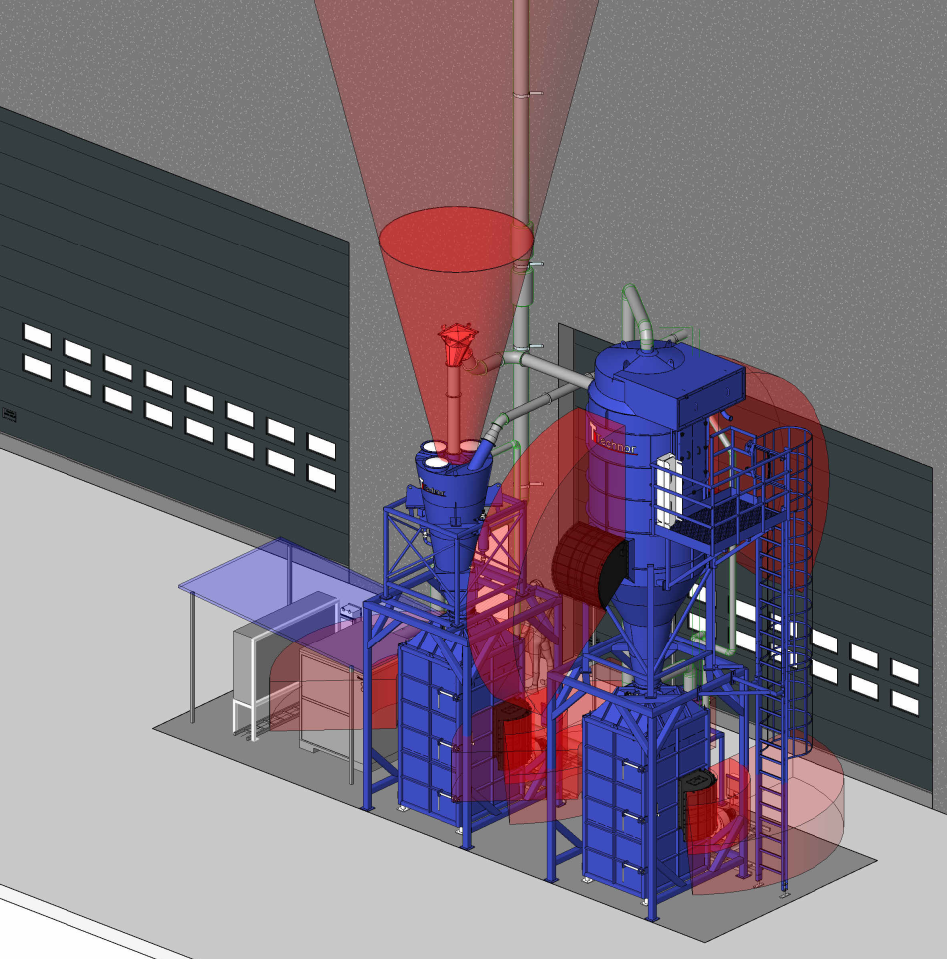
Fire insulation - ventilation and requirements
An often overlooked but very important area is ventilation requirements around fire insulation. Ventilation systems can act as a path for the spread of both fire and smoke if not carried out correctly.
Therefore, there are clear requirements for how ventilation ducts and components must be fire-proofed in commercial buildings.
Fire insulation and fire protection of ventilation includes, among other things:
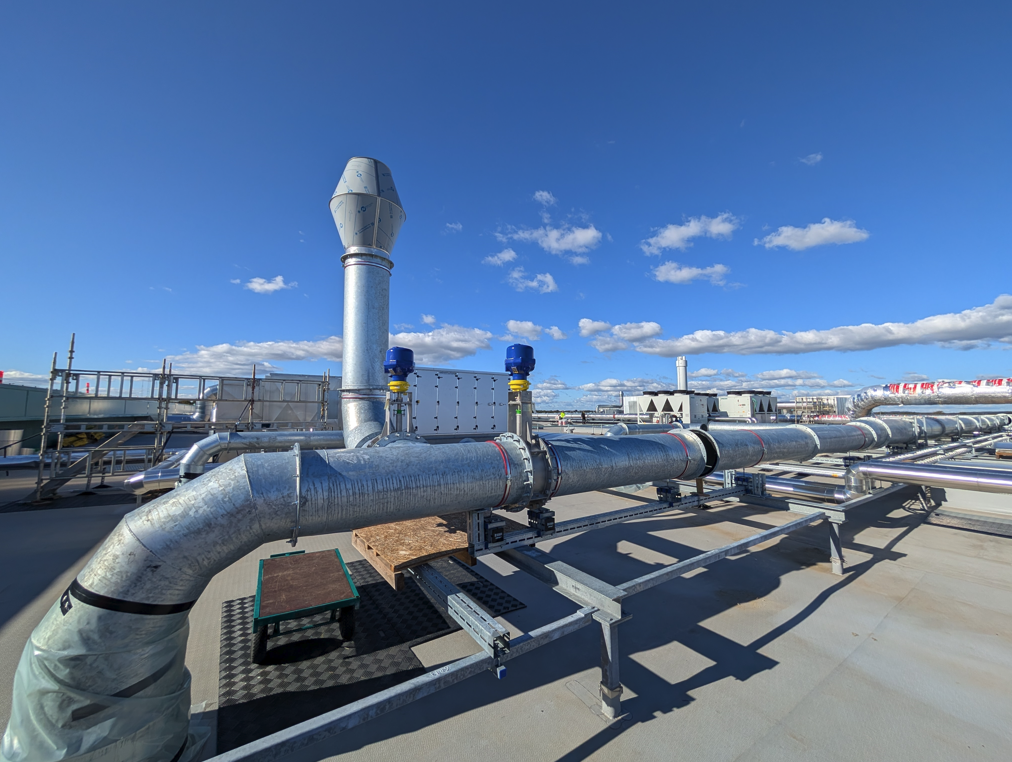
- Fire insulation of ventilation ducts so that they maintain their fire resistance
- Use of fire and smoke dampers at penetrations in fire-separating building parts
- Compliance with building regulations requirements for fire compartmentation
Proper fire insulation is an integral part of the requirements for ventilation in commercial buildings and should always be considered early in the design phase to avoid costly adjustments later.
Legislation and documentation
The requirements for ventilation in businesses primarily arise from:
- The Working Environment Act
- Building regulations
- AT guidelines and DS/EN standards
There are requirements that ventilation solutions are documented, maintained and function as intended throughout the entire lifespan of the facility.
Get a solution that meets your requirements
At Technor, we help companies obtain ventilation solutions that meet all applicable requirements for ventilation in business - from process ventilation and ATEX areas to fire insulation and documentation.
Contact us for a professional assessment of your needs and a solution that matches both legal requirements and practice.
35 years of experience in the industry
We have more than 35 years of experience in the ventilation and extraction industry, which is your guarantee that your system will be assembled and installed correctly. We also follow technological developments so that we can offer innovative, modern and energy-efficient solutions that are suitable for both new and older buildings.
Contact us today to hear more about process ventilation and what difference it can make to your business.
Relevant cases
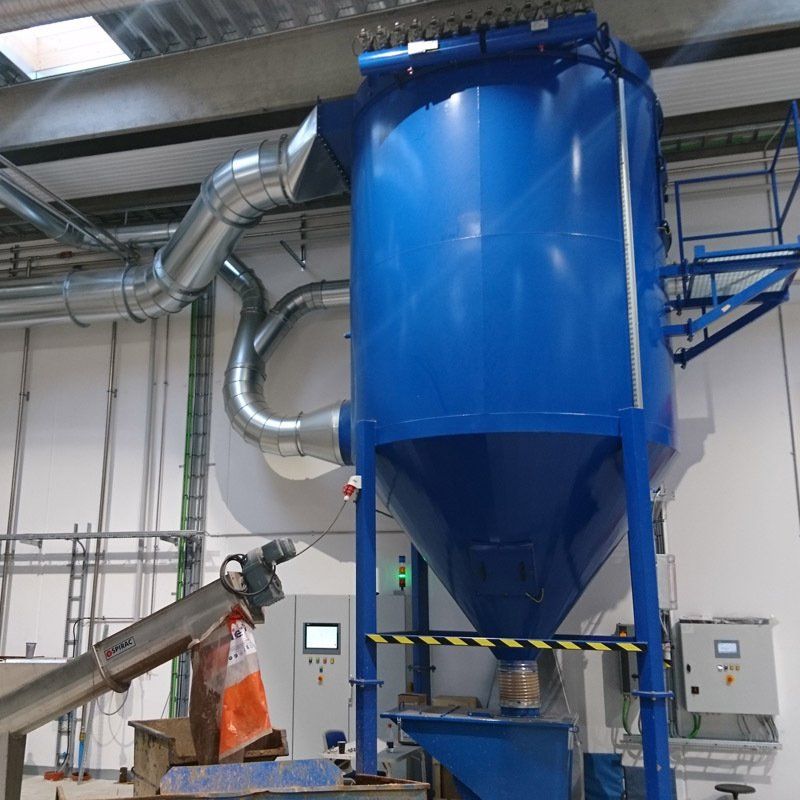
Randers Tegl A/S / Hammershøj Brickworks
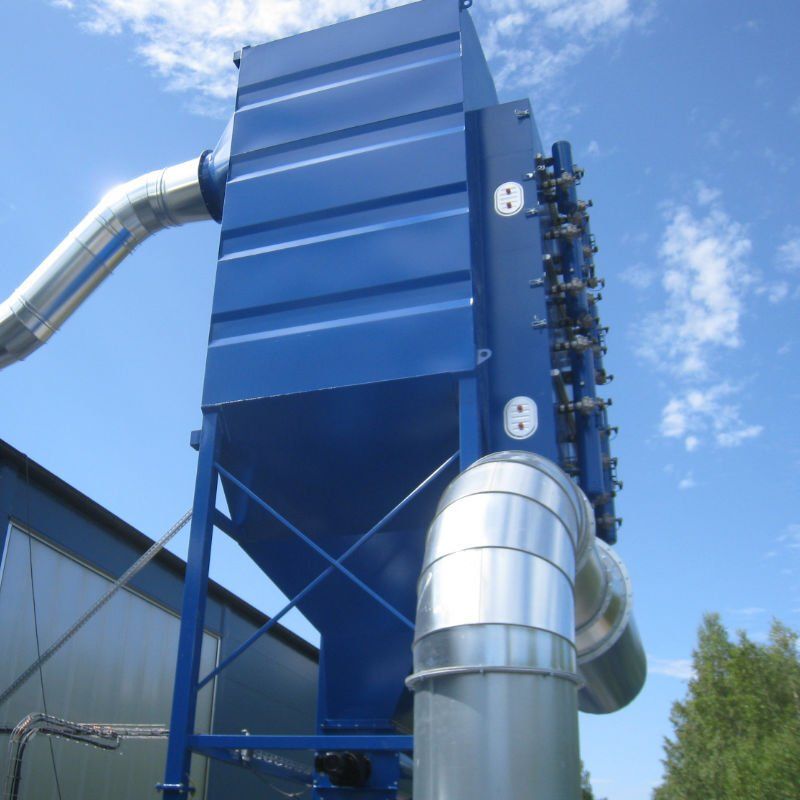
Mellerud Plast AB Sweden